

Technical Capability That Matches Real World Loads
- Commercial buildings face fluctuating occupancy, varying tenant demands, and changing operating hours
- BAC equipment is engineered to perform efficiently across part-load and peak conditions, supporting variable flow systems, multiple operating modes, and year-round heat rejection
- CTI certified thermal performance, multiple sound control options, and robust materials of construction ensure comfort and uptime in demanding commercial environments
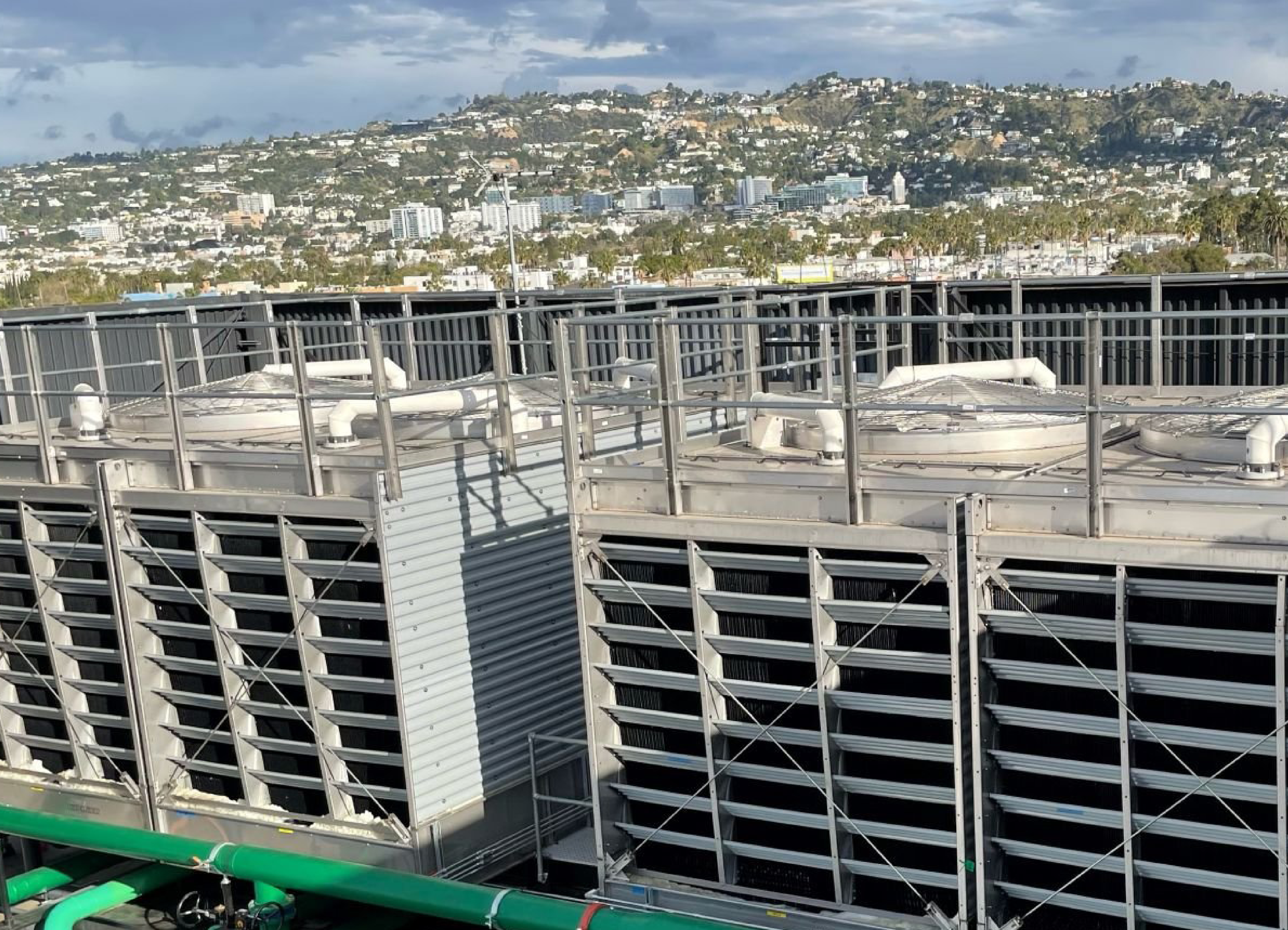
Energy Efficient by Design
- Energy costs are a major driver of operating expenses in commercial buildings
- BAC focuses on system‑level efficiency, helping reduce fan, pump, and compressor energy
- Optimized heat rejection lowers condenser water temperatures, reduces compressor lift, and supports variable‑speed operation delivering measurable reductions in annual energy use and utility spend
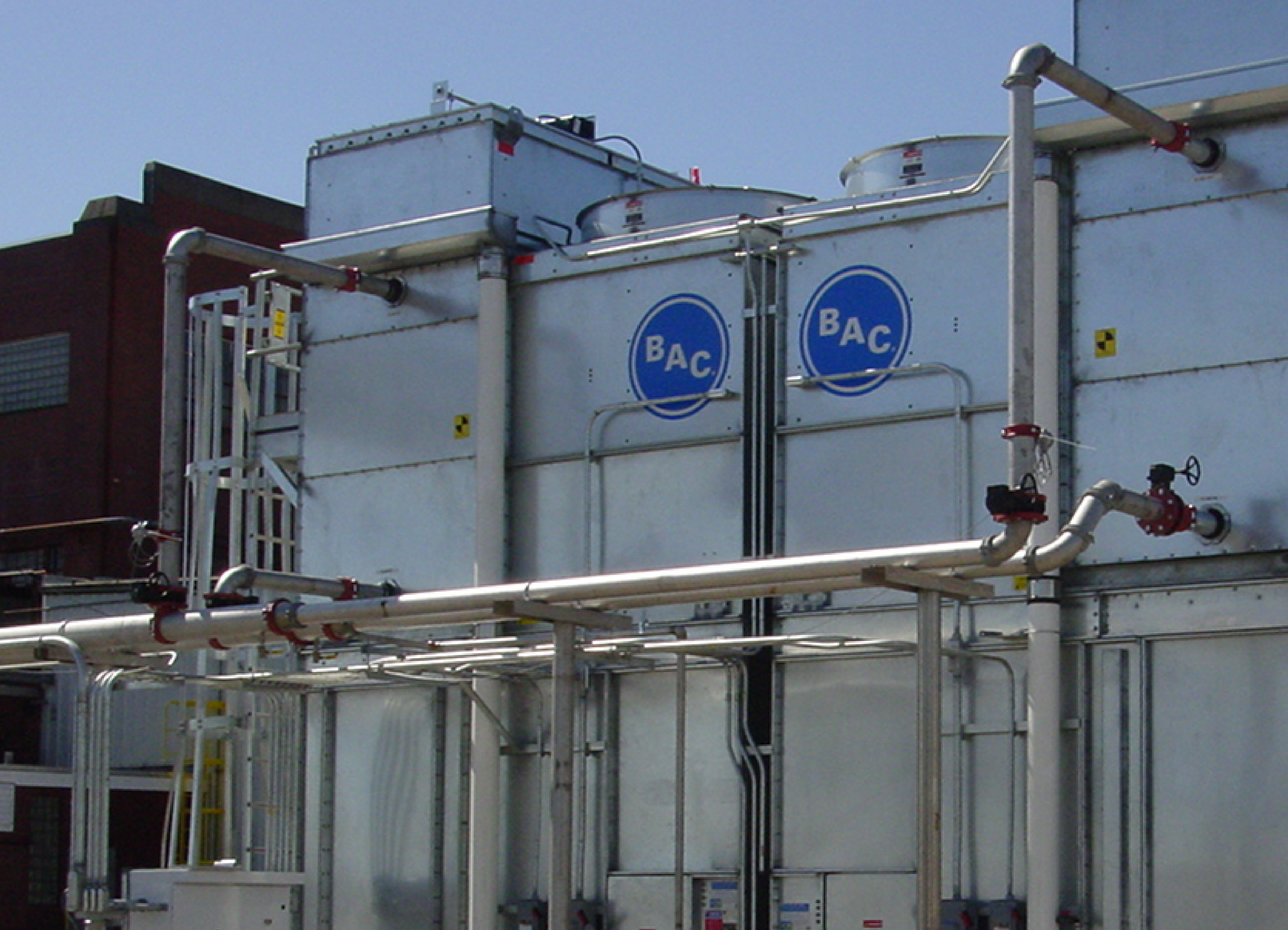
Compact and Low Sound Solutions
- Mechanical space is limited and expensive in office developments
- BAC cooling solutions are designed to maximize thermal capacity per square foot, with compact footprints and flexible layouts that fit rooftops, courtyards, and constrained mechanical yards freeing up rentable or usable building space
- Low sound fan and airflow options are ideal for urban area
How Our Products Support You
-
Series 3000 Cooling Tower
-
FXV Closed Circuit Cooling Tower
-
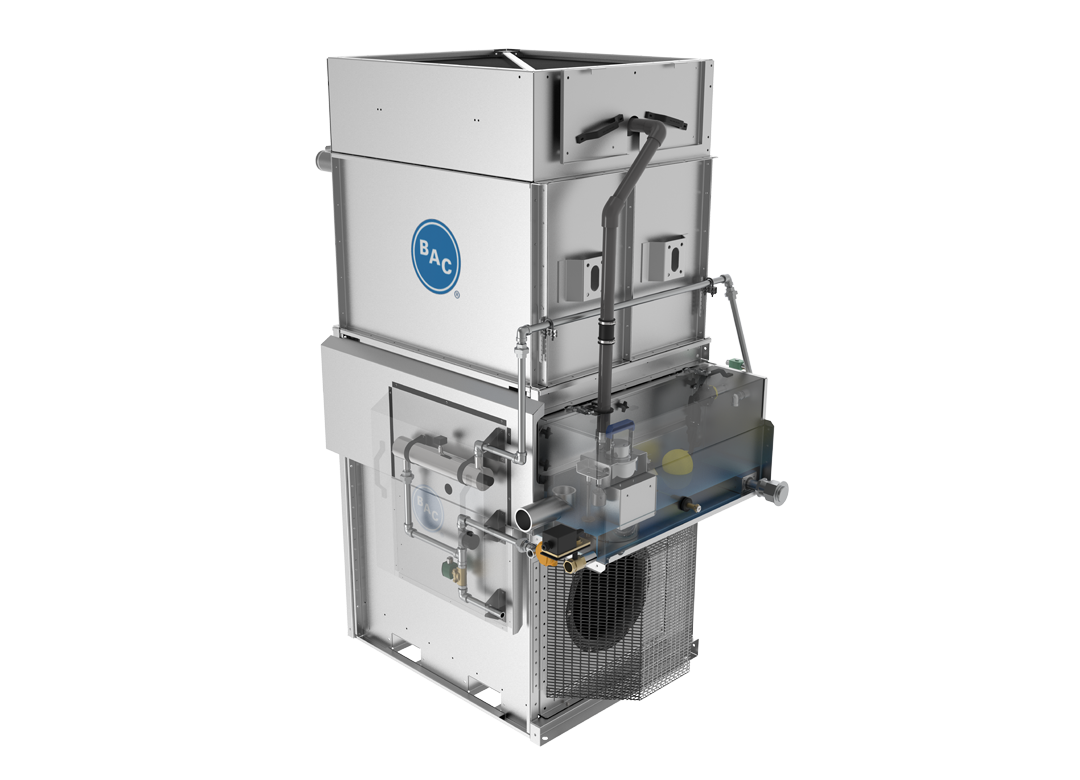
Nexus® Modular Hybrid Cooler
-
Series 1500 Cooling Tower
-
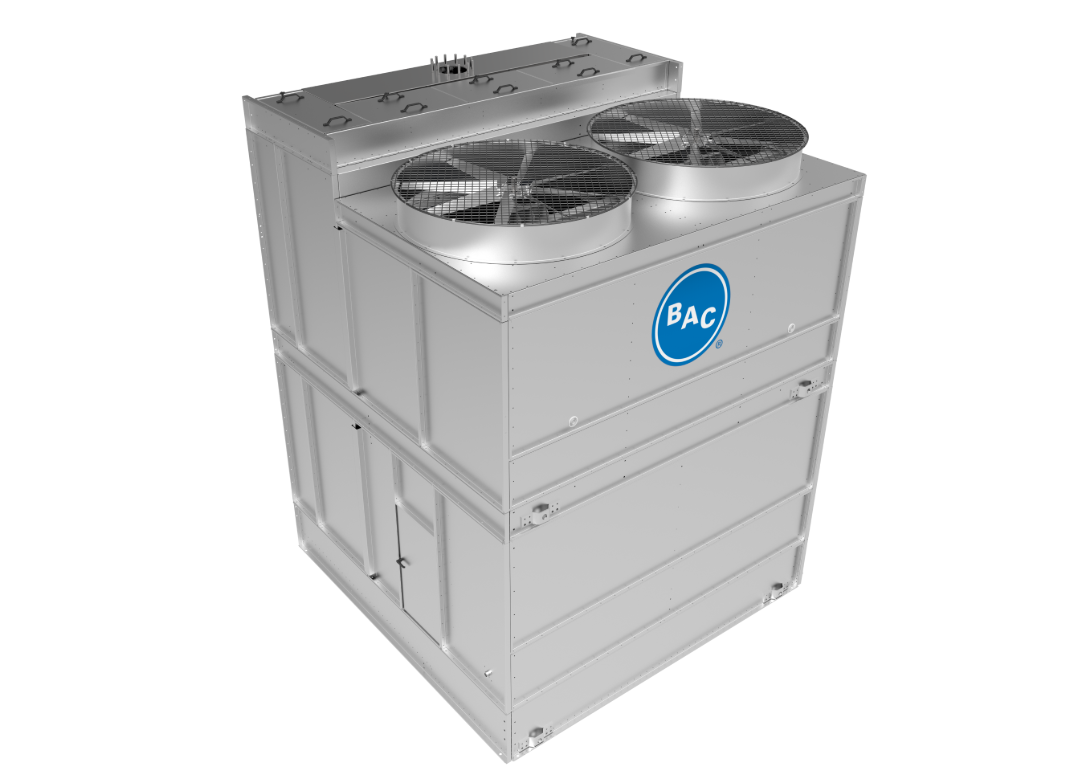
PT2 Cooling Tower
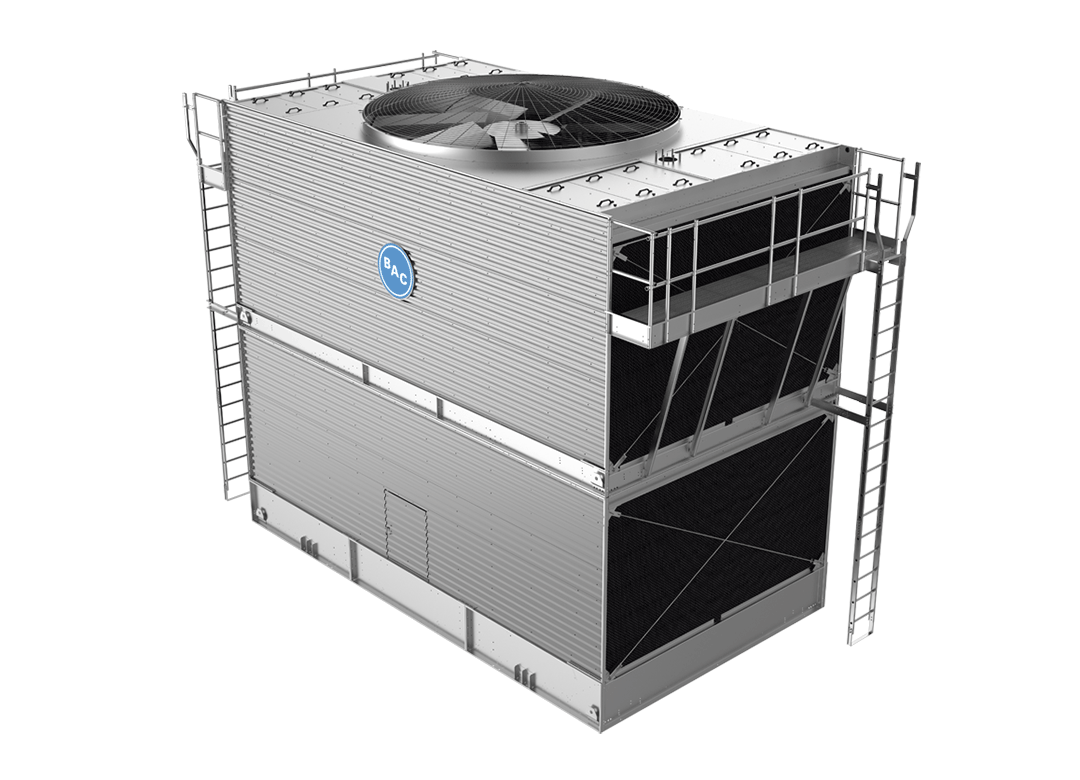
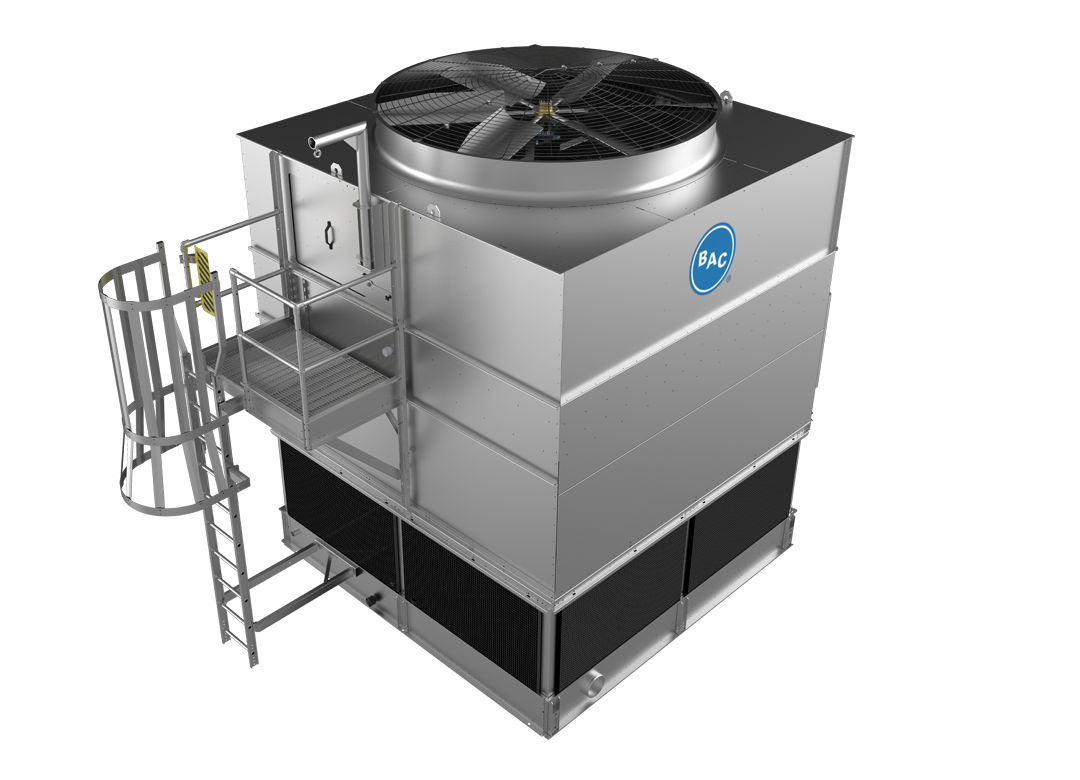
Series 3000 Cooling Tower
- A proven solution for large and mid-size office buildings requiring maximum efficiency and long-term reliability
- High‑efficiency thermal performance to reduce fan and pump energy
- Multi‑cell configurations for load flexibility and future expansion
- Engineered for durability in high‑use commercial environments
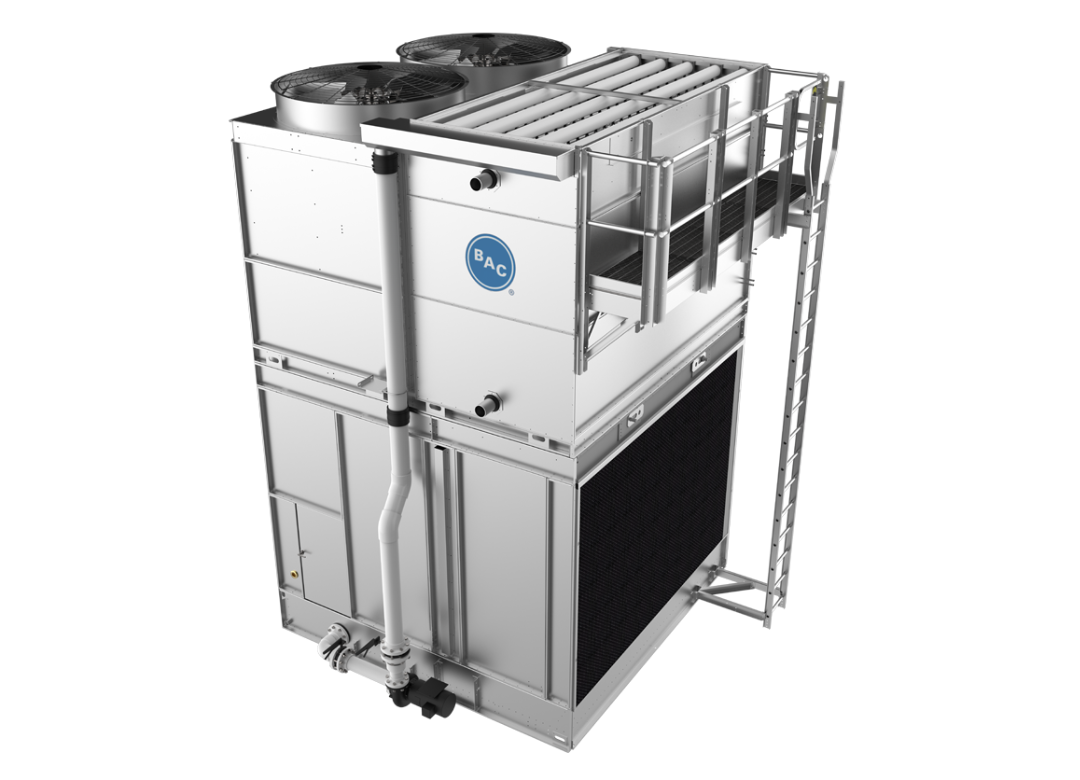
Frequently Asked Questions about Office Building Cooling
- What cooling systems are best suited for commercial buildings like offices?
The best cooling system for a commercial building depends on factors such as building size, climate, energy goals, and operational flexibility. Common approaches include:- Water-cooled chiller systems – Widely used in larger office buildings, these systems provide high efficiency and reliable performance, especially under varying load conditions. Cooling towers play a critical role by rejecting heat from the chiller system, helping maintain optimal efficiency.
- Water source heat pump (WSHP) systems – One of the most efficient options for commercial HVAC spaces, WSHP systems allow individual zones to heat or cool as needed while sharing a common water loop. Cooling towers support these systems by removing excess heat from the loop.
- Systems using plate and frame heat exchangers – These are often integrated into central plants to improve efficiency by enabling free cooling or heat transfer between systems. Cooling towers help enhance performance by rejecting heat from the system or supporting economizer operation.
- Air-cooled systems – Often used in smaller or mid-sized buildings, these systems are simple to install and require less infrastructure, making them a practical choice where water use is limited however, significantly more energy is used.
-
Why are cooling towers commonly used in office buildings instead of air cooled systems?
While air‑cooled chillers may offer lower initial cost, they are generally more energy intensive and can result in higher lifecycle operating costs.
Particularly in mid size and larger office buildings, condenser water systems with cooling towers will deliver lower total energy consumption, better performance during peak load and high ambient conditions, greater system redundancy and reliability, and longer product life, often 20+ years with routine maintenance.
-
Can office buildings expand cooling capacity without major disruptions?
Yes. BAC’s cooling equipment has a modular design with multi‑cell configurations, allowing additional capacity to be added in phases. This minimizes downtime and disruption during tenant growth, renovations, or future building expansion.
-
How do cooling solutions contribute to sustainability goals?
BAC cooling technologies help reduce energy and water use, supporting sustainability initiatives such as LEED certification, corporate ESG targets, and reduced carbon footprints, without sacrificing performance or comfort.
-
How do cooling towers reduce energy consumption?
Cooling towers reduce chiller energy consumption by lowering the temperature of the condenser water returning to the chiller. Cooler condenser water reduces compressor lift, allowing the chiller to operate more efficiently and consume less power.Because cooling towers reject heat through evaporative cooling, they can typically deliver condenser water temperatures lower than those achievable with air-cooled systems, particularly during moderate ambient conditions. This improves overall chiller performance and reduces the energy required to satisfy the building cooling load.
Additional efficiency gains can be achieved through variable-speed fan operation, optimized condenser water temperature control, and system designs that take advantage of lower outdoor wet-bulb temperatures throughout the year.
In many commercial office buildings, improved heat rejection from cooling towers contributes to meaningful reductions in annual HVAC energy consumption and operating costs.