Energy Optimization at the Rack Level
- Lower condensing temperatures through evaporative and adiabatic heat rejection, reducing compressor lift and energy demand at the rack
- Intelligent adiabatic operation balances dry and adiabatic modes to optimize energy performance while using water only when conditions require it
- Variable‑speed fans and optimized controls match condenser output to real‑time rack load, preventing unnecessary energy use
- Stable rack operation in higher ambient conditions, supporting efficient CO₂ transcritical and subcritical system performance
Refrigeration You Can Rely On
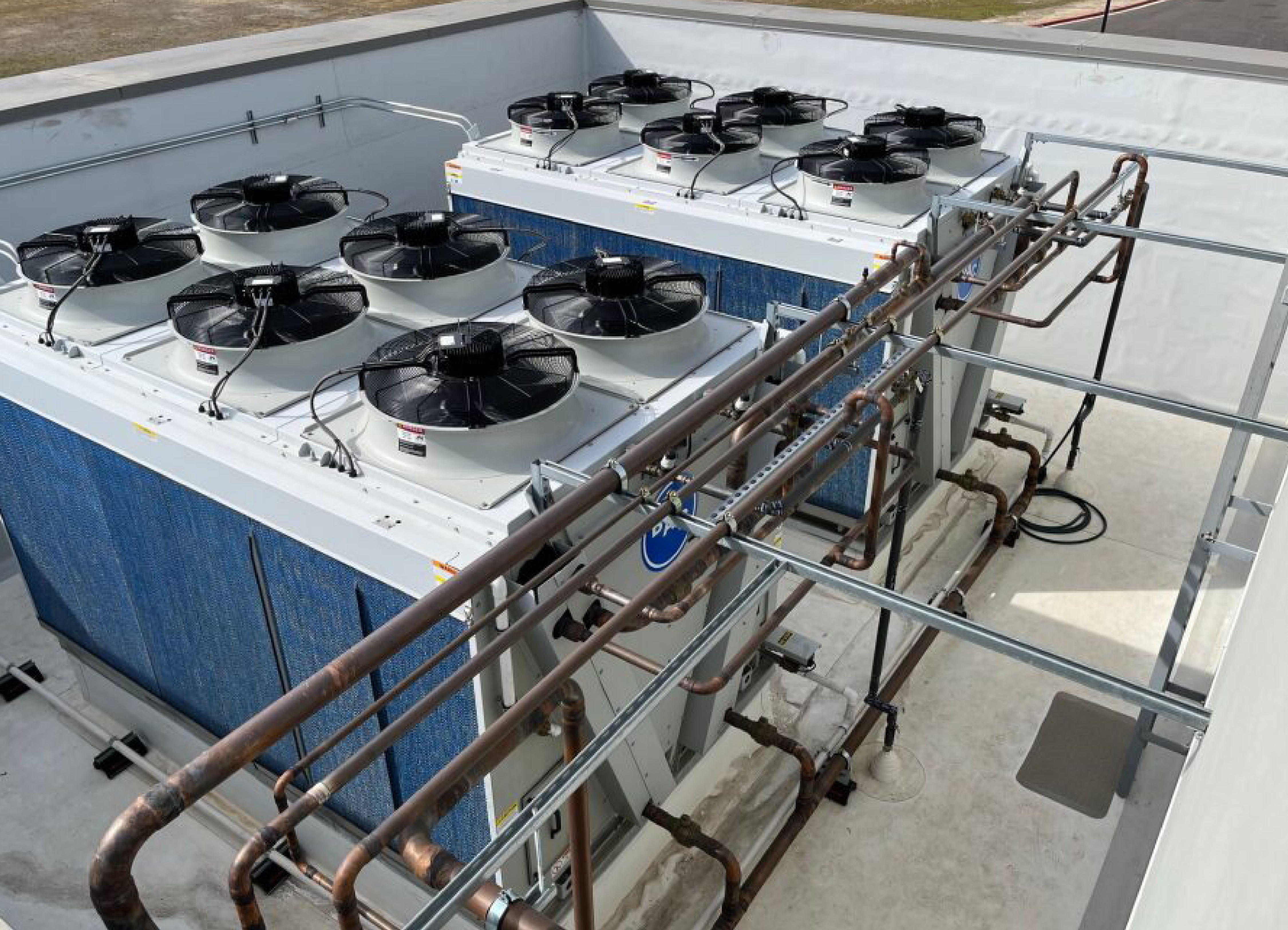
- Stable condenser performance for CO₂, ammonia, water/glycol, and other refrigeration systems
- Consistent temperatures across display cases and walk-ins
- Supports food safety and product quality
- Designed for continuous operation during peak demand
How Our Products Support You
-
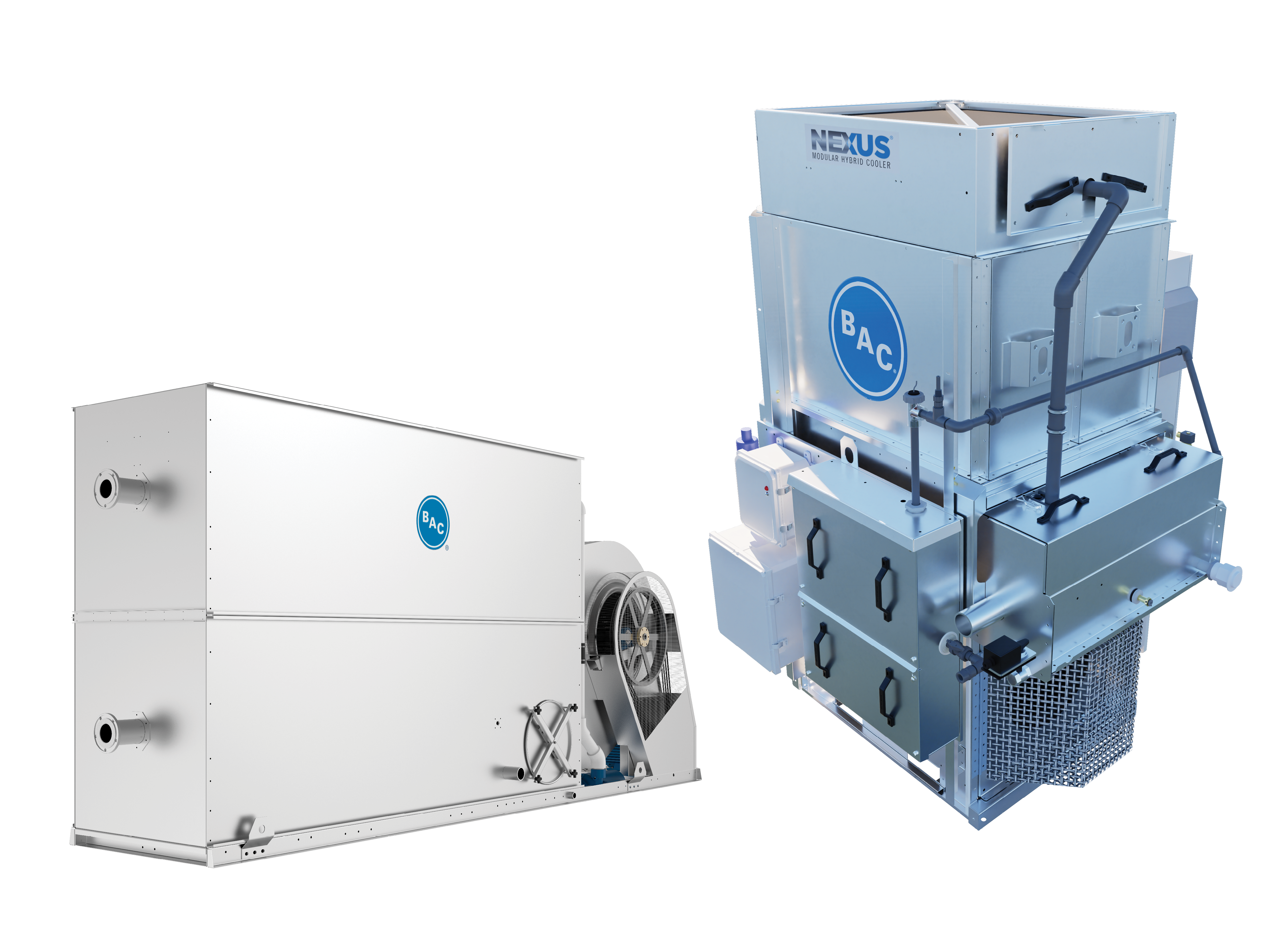
Adiabatic Condensers & Coolers
-
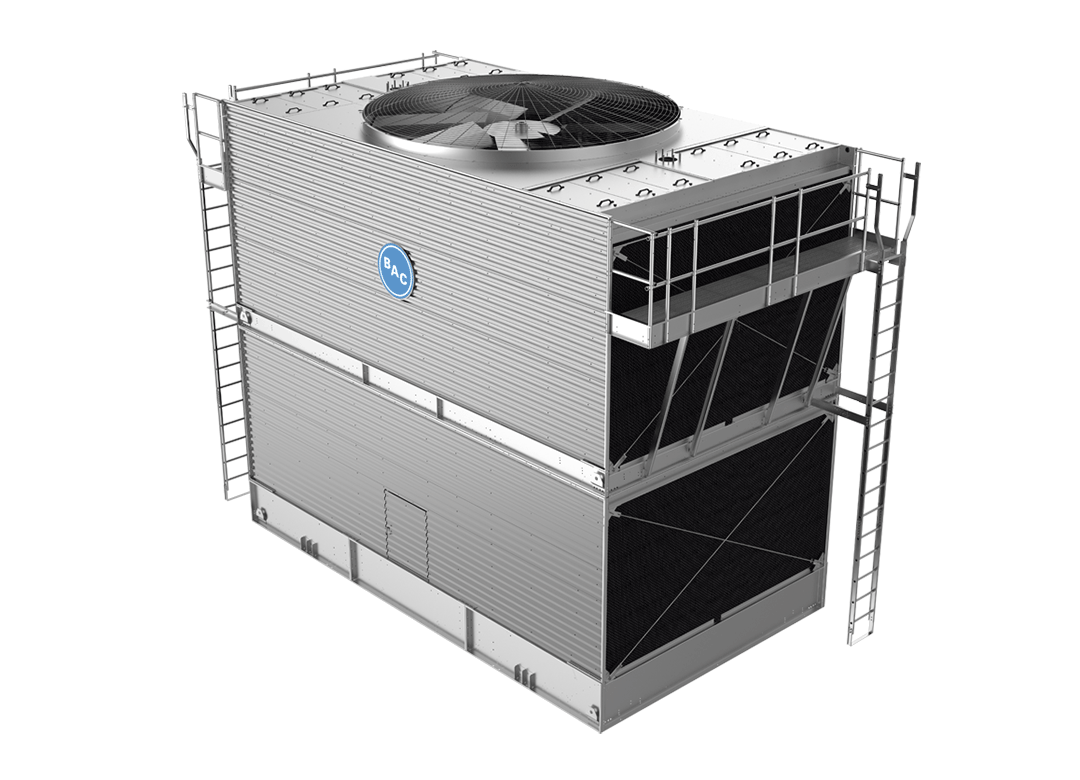
Evaporative Condensers
-
Evaporative and Hybrid Coolers
Adiabatic Condensers & Coolers
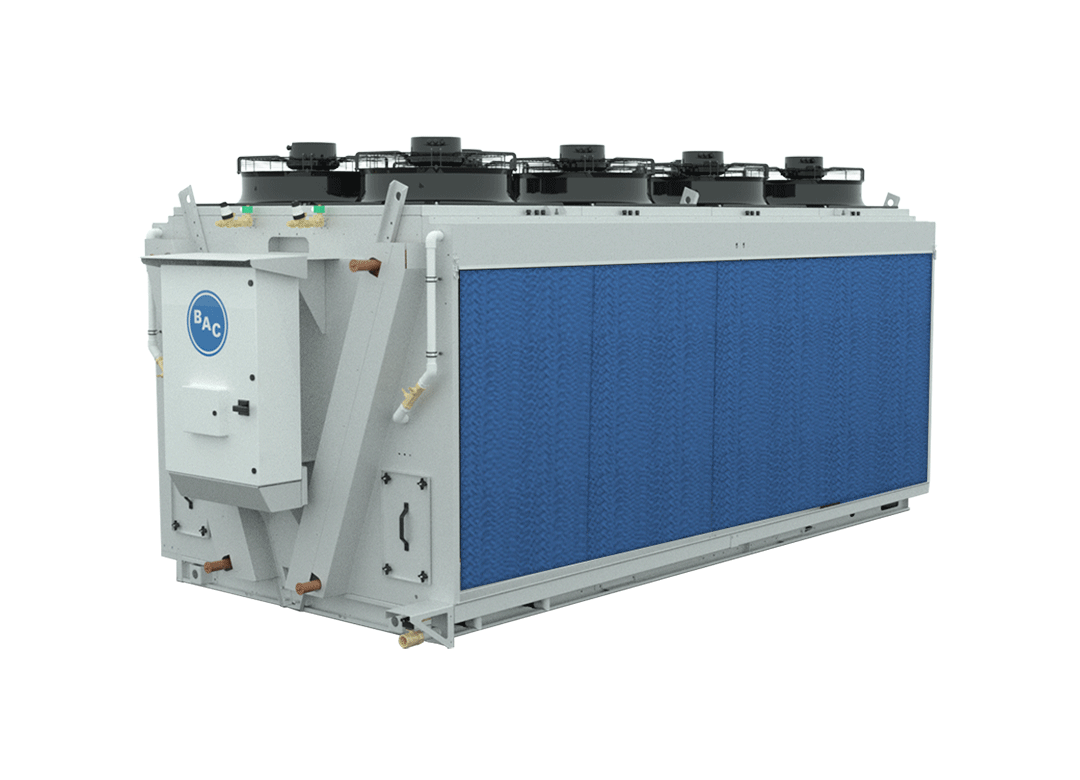
TRILLIUMSERIES® ADIABATIC CONDENSER & COOLER
- Reduce peak energy use by 44% vs. traditional air-cooled products
- Prevent scaling and maintain water quality with daily self-clean protocols
- Maintenance and inspections can be performed quickly and easily with no need for ladders, platforms, or tools with easy access to all components
- Redundant EC fans ensure continuous refrigeration operation
- 10+ years of proven performance for reliable day‑to‑day operation
Frequently Asked Questions for Supermarket Refrigeration and Cooling
-
What condenser technologies are ideal for supermarkets?
First, the supermarket will choose the refrigerant. Then they will look at the available technologies that use that refringent. Supermarkets most commonly choose adiabatic condensers as an alternative to traditional air‑cooled condensers, particularly for CO₂ and high‑efficiency refrigeration systems. Evaporative condensers are also used in larger or centralized applications where continuous evaporative heat rejection is desired. Air‑cooled condensers remain a common technology, but many retailers are starting transition away from them due to higher energy use and performance limitations at elevated outdoor temperatures. -
How does outside air temperature (OAT) affect supermarket refrigeration systems?
Outside Air Temperature (OAT) directly impacts condenser performance and compressor energy use. As OAT increases, condensing pressure rises, increasing compressor lift and energy demand. Technologies such as evaporative and adiabatic condensers reduce sensitivity to high OAT, helping maintain stable refrigeration performance during hot conditions. -
Why do supermarkets choose adiabatic condensers instead of air‑cooled condensers?
Supermarkets choose adiabatic condensers because they deliver better performance at high outdoor ambient temperatures while operating with lower sound levels and a smaller footprint than traditional air‑cooled systems. By reducing the temperature of air entering the coil when conditions demand it, adiabatic condensers allow lower condensing pressures, improved system stability, and better energy performance—without the continuous water use of evaporative systems. -
When would a supermarket choose evaporative cooling instead of adiabatic or air‑cooled?
When sound and footprint are the most important criteria, evaporative condensers may be selected for larger‑capacity systems where continuously low condensing temperatures are required. Most supermarkets, however, choose adiabatic condensers as an upgrade path from air‑cooled technology, balancing energy efficiency, water usage, and operational simplicity. -
How do adiabatic condensers support food safety better than air‑cooled systems?
By maintaining more stable condensing temperatures during warm weather, adiabatic condensers help prevent refrigeration temperature fluctuations that can occur with air‑cooled systems under high outside air temperature, supporting consistent case temperatures and food safety compliance. -
How does condenser selection affect store footprint and rooftop space?
Adiabatic systems require a moderate footprint, while air‑cooled solutions typically need the most space due to reliance on dry air heat transfer. Evaporative condensers generally offer the smallest footprint for a given refrigeration capacity.
Related Documents